
Innovation has always driven the skincare industry forward.
For decades, brands competed by discovering the next breakthrough ingredient. Vitamin C, Retinol, Hyaluronic Acid, Peptides, and more recently PDRN have each reshaped the market and influenced product development worldwide.
Today, another ingredient has entered the spotlight.
Exosomes.
Once primarily discussed in regenerative medicine and biomedical research, exosomes are now becoming one of the fastest-growing ingredients in premium skincare. From professional aesthetic clinics to international beauty exhibitions, exosome-based products are rapidly expanding across nearly every high-performance skincare category.
However, while much attention has been given to what exosomes are and what they contain, one equally important topic often receives far less discussion.
How are exosomes delivered into the skin?
This question has become increasingly important because even the most advanced active ingredient must first overcome the skin’s natural protective barrier before it can perform as intended.
As a result, the conversation within the skincare industry is gradually changing.
Innovation is no longer defined solely by discovering better ingredients.
Increasingly, it is defined by developing better delivery technologies.
Understanding this shift helps explain not only the growing popularity of exosomes, but also why technologies such as liposomes, nanocarriers, and dissolving microneedles are becoming central to the future of skincare.
What Are Exosomes?
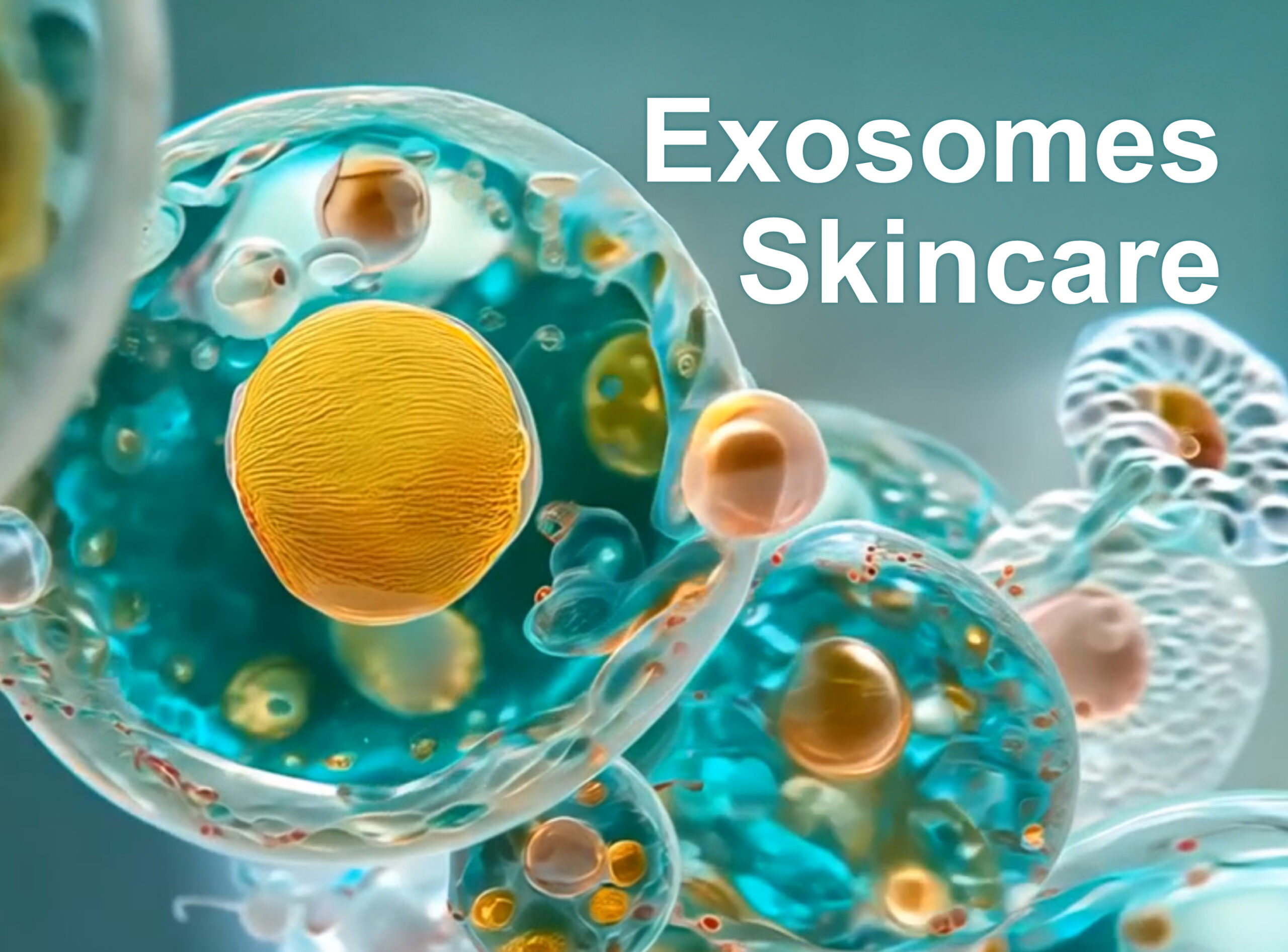
Exosomes are naturally occurring extracellular vesicles (EVs) released by almost all types of cells.
Typically measuring between 30 and 150 nanometers in diameter, these microscopic vesicles function as biological messengers, transporting proteins, lipids, nucleic acids, and other signaling molecules between cells.
This ability to facilitate intercellular communication has made exosomes an important area of study in regenerative medicine, tissue engineering, and cell biology.
In recent years, advances in biotechnology have also led researchers and cosmetic manufacturers to explore their potential in skincare applications.
Although cosmetic products do not use exosomes as medical therapies, exosome-derived ingredients have attracted significant interest as next-generation cosmetic actives due to their biological origin and their association with advanced skincare innovation.
As scientific understanding continues to evolve, exosomes have become one of the most recognizable premium ingredients in the global beauty industry.
Why Have Exosomes Become So Popular?
The rapid rise of exosomes reflects a much broader transformation within the skincare market.
Modern consumers are increasingly informed about ingredients. Instead of purchasing products based solely on marketing claims, they actively seek formulations supported by scientific research and innovative technologies.
This shift has accelerated the adoption of advanced active ingredients, including:
- Hyaluronic Acid
- Vitamin C
- Retinol
- Peptides
- PDRN
- Exosomes
Among these ingredients, exosomes have attracted exceptional attention because they represent more than another trending cosmetic ingredient.
They symbolize the growing convergence of biotechnology and skincare.
For brands, incorporating exosome-derived ingredients also provides an opportunity to position products within the premium skincare segment, where consumers increasingly associate biotechnology with innovation, precision, and scientific credibility.
At the same time, aesthetic medicine has further accelerated public awareness.
Professional clinics around the world have introduced exosome-related treatments into post-procedure skincare protocols, contributing to increased consumer recognition and market demand.
As this awareness continues to grow, exosomes are rapidly expanding beyond professional settings into everyday skincare products designed for home use.
Yet despite their growing popularity, every topical skincare product faces the same biological challenge.
The skin itself.
That challenge has shifted industry attention toward a new competitive advantage.
Not simply discovering better ingredients, but delivering those ingredients more effectively.
What’s Next?
Now that we’ve explored what exosomes are and why they have become one of the fastest-growing skincare ingredients, the next question is even more important:
How are exosomes actually used in skincare products, and why does delivery technology play such a critical role?
In the next section, we’ll examine the current applications of exosomes in modern skincare before exploring why advanced delivery systems have become one of the industry’s fastest-growing areas of innovation.
How Are Exosomes Used in Modern Skincare?
As exosome research has advanced, their applications have expanded far beyond the laboratory.
Today, exosome-derived ingredients can be found in a growing variety of skincare products, ranging from daily home care to professional post-treatment solutions.
Common product formats include:
- Facial serums
- Concentrated ampoules
- Sheet masks
- Hydrogel masks
- Eye patches
- Dissolving microneedle patches
- Professional post-procedure skincare products
This diversity reflects the versatility of exosome-based formulations and the increasing demand for biotechnology-inspired skincare.
At the same time, aesthetic clinics have played an important role in accelerating consumer awareness. Professional treatments incorporating exosome-derived ingredients have become increasingly common as part of post-procedure skincare protocols, further driving market interest in exosome-containing cosmetic products.
As more brands introduce exosome-based formulations, competition is gradually shifting.
Success is no longer determined solely by offering the latest active ingredient. Instead, brands are beginning to differentiate themselves through formulation science, delivery systems, and product experience.
This shift marks an important transition within the skincare industry.
Innovation is moving beyond ingredients alone.
The Skin Barrier: Why Delivery Still Matters
No matter how advanced an ingredient may be, every topical skincare product encounters the same biological obstacle.
The skin barrier.
The outermost layer of the skin, known as the stratum corneum, is designed to protect the body by limiting the penetration of external substances. This natural defense helps prevent water loss while shielding the skin from environmental stressors, microorganisms, and foreign particles.
For cosmetic formulators, however, this protective function presents a significant challenge.
Many active ingredients applied to the skin remain primarily on the surface, where the stratum corneum restricts their movement into deeper skin layers.
This does not diminish the value of advanced ingredients such as exosomes. Instead, it highlights an equally important consideration.
An ingredient’s effectiveness depends not only on its formulation, but also on how efficiently it can be delivered to the skin.
For this reason, skincare innovation is increasingly focused on improving delivery strategies rather than relying solely on ingredient discovery.
Today, the industry’s most important question is no longer:
“What is the next breakthrough ingredient?”
It has become:
“How can we maximize the performance of the ingredients we already have?”
Why Are Exosomes Commonly Combined with Aesthetic Procedures?
One of the clearest examples of the growing importance of delivery technology can be seen in aesthetic medicine.
In professional clinics, exosome-derived products are frequently incorporated into post-treatment skincare protocols alongside procedures such as:
- Microneedling
- Fractional laser treatments
- Injectable therapies
These procedures are designed to improve ingredient access by temporarily altering or bypassing the skin’s outer barrier before topical products are applied.
Rather than relying solely on passive absorption through intact skin, they create conditions that may enhance contact between active ingredients and the skin.
This widespread clinical practice illustrates an important concept.
The industry is no longer focused exclusively on discovering more powerful ingredients.
Increasingly, it is investing in technologies that improve how those ingredients are delivered.
This shift has given rise to a new generation of skincare innovation known as Delivery Technology.
Today, delivery technology has become one of the fastest-growing areas of cosmetic research, influencing not only product performance but also formulation design, manufacturing processes, and product development strategies.
As a result, brands are beginning to evaluate active ingredients and delivery systems as complementary technologies rather than separate innovations.
In other words, ingredient innovation and delivery innovation are no longer competing. Together, they define the future of advanced skincare.
Next: From Ingredient Innovation to Delivery Innovation
Understanding the importance of delivery naturally leads to another question:
How do modern skincare products improve ingredient delivery?
Today, the industry generally relies on two different approaches.
The first is formulation-based delivery, where technologies such as liposomes and nanocarriers are incorporated into the formulation itself.
The second is device-assisted delivery, where physical technologies such as dissolving microneedles help active ingredients move beyond the skin’s outer barrier.
Each approach offers unique advantages, and together they are reshaping how next-generation skincare products are developed.
| Delivery Strategy | How It Works | Typical Applications |
|---|---|---|
| Liposome | Encapsulates ingredients in phospholipid vesicles | Serums, creams |
| Nanocarrier | Protects and controls ingredient release | Premium skincare formulations |
| Dissolving Microneedle | Creates microchannels while releasing ingredients into the skin | Patches, transdermal skincare |
The Rise of Delivery Technology
This shift has given rise to one of the fastest-growing areas of cosmetic science:
Delivery Technology.
Rather than focusing solely on discovering new ingredients, delivery technologies are designed to improve how active ingredients are protected, transported, and released within the skin.
Depending on the formulation and product design, these technologies may help improve ingredient stability, optimize release profiles, or enhance interaction with the skin.
Today, modern skincare delivery systems generally fall into two categories:
- Formulation-Based Delivery Technologies, which optimize the formulation itself.
- Device-Assisted Delivery Technologies, which use physical approaches to support ingredient delivery.
Together, these technologies are reshaping the future of skincare formulation and product innovation.
In the next section, we’ll explore the most widely used delivery technologies, including liposomes, nanocarriers, and dissolving microneedles, and examine how each approach contributes to the development of next-generation skincare products.
From Ingredient Innovation to Delivery Innovation
For many years, skincare innovation was driven primarily by the discovery of new active ingredients.
Each breakthrough ingredient promised new possibilities, leading brands to compete by introducing increasingly sophisticated formulations.
Today, however, the landscape is changing.
As advanced ingredients become more widely available, true differentiation no longer depends solely on what is inside a product.
It increasingly depends on how those ingredients are delivered.
This shift has accelerated the development of delivery technologies designed to improve ingredient stability, optimize release profiles, and enhance interactions between topical formulations and the skin.
Rather than competing with ingredient innovation, delivery technology has become an essential part of it.
Modern skincare products now combine advanced ingredients with equally advanced delivery systems to maximize formulation performance.
Broadly speaking, today’s delivery technologies can be divided into two categories:
- Formulation-Based Delivery Technologies
- Device-Assisted Delivery Technologies
Each approach addresses different formulation challenges and serves different product applications.
Formulation-Based Delivery Technologies
Formulation-based delivery technologies improve the performance of skincare ingredients through formulation design, without physically altering the skin.
Their primary goals include protecting sensitive ingredients, improving formulation stability, and controlling how ingredients are released after application.
Among the most widely used technologies are liposomes and nanocarriers.
Liposome Technology
Liposomes are microscopic vesicles composed of phospholipid bilayers, similar in structure to cell membranes.
By encapsulating active ingredients inside these vesicles, liposome technology helps protect sensitive ingredients from degradation while improving formulation stability.
Because of their compatibility with a wide range of cosmetic ingredients, liposomes have become one of the most established delivery systems used in premium skincare formulations.
Today, liposome technology is commonly applied to ingredients such as vitamins, antioxidants, peptides, and botanical extracts.
Nanocarrier Systems
Nanocarriers represent another important advancement in cosmetic formulation science.
Rather than referring to a single technology, the term encompasses various nano-scale delivery platforms designed to transport active ingredients more efficiently within cosmetic formulations.
Depending on the specific system, nanocarriers may help:
- Protect sensitive bioactive ingredients
- Improve formulation stability
- Control ingredient release
- Enhance overall formulation performance
As increasingly complex cosmetic ingredients enter the market, nanocarrier technologies continue to play an important role in supporting modern skincare formulation.
Device-Assisted Delivery Technologies
While formulation-based technologies work within the product itself, device-assisted delivery technologies use physical approaches to improve ingredient delivery.
Instead of relying entirely on passive diffusion across the skin surface, these technologies temporarily modify the interaction between the product and the skin.
Examples include:
- Microneedling
- Fractional laser treatments
- Dissolving microneedles
Although these technologies differ in their mechanisms, they all reflect the same objective:
To improve how active ingredients are delivered to the skin.
Among them, dissolving microneedles have emerged as one of the most innovative approaches for topical skincare because they combine formulation science with precision manufacturing.
Why Dissolving Microneedles Are Gaining Attention
Unlike conventional skincare products that are applied only to the skin’s surface, dissolving microneedles are engineered to incorporate active ingredients directly into microscopic, biodegradable needle structures.
Upon application, these microneedles create temporary microchannels through the outermost layer of the skin while gradually dissolving to release the encapsulated ingredients.
This unique mechanism allows dissolving microneedles to function as both a delivery platform and an active skincare product.
Because the microneedles themselves are composed of dissolvable materials, no sharp waste remains after use, making them a practical and increasingly popular format for premium skincare applications.
As demand for biotechnology-inspired skincare continues to grow, dissolving microneedles are attracting attention as a next-generation delivery platform suitable for ingredients such as peptides, PDRN, exosomes, and other advanced cosmetic actives.
For skincare brands, this technology offers more than a new product format.
It provides a new way to combine innovative ingredients with advanced delivery strategies, creating opportunities for greater product differentiation in an increasingly competitive market.
Why Dissolving Microneedles Represent the Future of Skincare Delivery
As skincare formulations become increasingly sophisticated, developing innovative ingredients alone is no longer enough.
The next generation of cosmetic products will depend on how effectively those ingredients can be delivered, how consistently they can be manufactured, and how reliably they perform from one product to the next.
This is one of the reasons dissolving microneedles have attracted growing attention across the global skincare industry.
Unlike conventional topical products, dissolving microneedles combine formulation science with physical delivery. Active ingredients are incorporated directly into biodegradable microneedle structures that dissolve after application, creating a transdermal delivery platform without leaving sharp waste behind.
More importantly, the performance of a dissolving microneedle product is influenced not only by its formulation, but also by how precisely each microneedle is manufactured.
Characteristics such as needle geometry, mechanical strength, ingredient distribution, and manufacturing consistency all contribute to the quality and reproducibility of the final product.
For this reason, precision manufacturing has become a critical factor in the development of high-quality dissolving microneedle products.
Precision Manufacturing: The Foundation Behind Advanced Microneedles
Although dissolving microneedles are often discussed as a skincare innovation, they are equally a manufacturing innovation.
Producing hundreds of microscopic structures with consistent dimensions, reliable mechanical properties, and uniform ingredient loading requires advanced manufacturing capabilities and stringent quality control.
Even minor variations in the production process may affect product consistency, making manufacturing precision an essential part of microneedle development.
At MicroDoctor, dissolving microneedles are produced using a proprietary Micro-Molding manufacturing process developed through years of precision engineering experience.
This manufacturing platform enables the precise fabrication of dissolving microneedle arrays while supporting the integration of customized cosmetic ingredients into the microneedle matrix.
According to MicroDoctor’s technical information, the platform is designed to support Transdermal Delivery System (TDDS) applications and provides flexible OEM and ODM development services for skincare brands seeking customized dissolving microneedle solutions.
For brands, this means greater flexibility in product design, ingredient selection, patch geometry, and formulation development while maintaining consistent manufacturing quality.
The Future of Skincare Is Built on Three Pillars
The evolution of skincare is no longer driven by ingredients alone.
Increasingly, successful product development depends on the integration of three complementary elements:
Innovative Ingredients
Advanced cosmetic actives such as peptides, PDRN, exosomes, and other biotechnology-derived ingredients continue to expand the possibilities of skincare formulation.
Advanced Delivery Technologies
Delivery platforms including liposomes, nanocarriers, and dissolving microneedles are helping improve how cosmetic ingredients are protected, transported, and released within the skin.
Precision Manufacturing
Reliable manufacturing technologies ensure that innovative formulations can be produced consistently at commercial scale while maintaining product quality and performance.
Together, these three pillars are reshaping how next-generation skincare products are designed and developed.
Conclusion
Exosomes have become one of the most recognized active ingredients in modern skincare.
Yet their growing popularity reflects a broader transformation occurring across the cosmetic industry.
Brands are no longer competing solely by introducing new ingredients.
They are increasingly competing through formulation science, delivery technology, and manufacturing capability.
As biotechnology continues to advance, tomorrow’s skincare innovations will not be defined simply by what ingredients are used, but by how those ingredients are formulated, delivered, and manufactured.
From liposomes and nanocarriers to dissolving microneedles, delivery technologies are helping redefine the possibilities of topical skincare.
Among these innovations, dissolving microneedles stand out by combining transdermal delivery with precision manufacturing, creating new opportunities for brands to develop differentiated, high-performance skincare products.
For cosmetic brands exploring the next generation of skincare, understanding delivery technology is no longer optional.
It is becoming an essential part of product innovation.
FAQ
What are exosomes in skincare?
Exosomes are naturally occurring extracellular vesicles that contain proteins, lipids, nucleic acids, and signaling molecules involved in cell-to-cell communication. They are increasingly incorporated into advanced skincare formulations as biotechnology-derived cosmetic ingredients.
Why are exosomes becoming more popular?
Growing consumer interest in science-backed skincare, together with advances in biotechnology, has accelerated the adoption of exosome-derived ingredients in premium cosmetic products.
Why do exosomes need advanced delivery technology?
Like many topical active ingredients, exosome-derived ingredients must overcome the skin’s natural barrier before they can interact with the skin effectively. Advanced delivery technologies are designed to improve ingredient protection, transport, and release, helping maximize formulation performance.
What delivery technologies are commonly used in skincare?
Modern skincare generally uses two types of delivery technologies:
- Formulation-Based Delivery Technologies, such as liposomes and nanocarriers.
- Device-Assisted Delivery Technologies, such as dissolving microneedles.
Each approach addresses different formulation and product development objectives.
Why are dissolving microneedles receiving increasing attention?
Dissolving microneedles combine biodegradable materials with transdermal delivery by incorporating active ingredients directly into microscopic needle structures that dissolve after application. This unique design has made them an increasingly attractive platform for premium skincare products.
Why does precision manufacturing matter in dissolving microneedles?
Because dissolving microneedles contain hundreds of microscopic structures, manufacturing precision is essential for maintaining consistent needle geometry, ingredient distribution, and overall product quality. Reliable manufacturing processes help ensure reproducible performance across every production batch.